Reading time: min
With our devicenow DaaS solution, we operate in a fast-moving, modern environment. Speed, performance, and efficiency are our standard. But let’s be honest: sometimes there’s just no time to step back and explore the ideas shaping our industry and discover the great minds behind them.
That’s why we’re launching “3 Questions to…”, a compact Q&A series with thought leaders from our partner network. Only three questions. Only three answers. But plenty of insight. Your knowledge snack for in-between.
Most enterprises know they need to modernise their IT, but the existing fleet stands in the way. Sale and Rent Back is devicenow’s fastest path from owned hardware to a fully managed Device as a Service model. devicenow purchases your existing fleet at fair market value and immediately rents it back on a subscription basis. Same devices, same users, predictable monthly costs, and a DaaS journey that starts from day one.
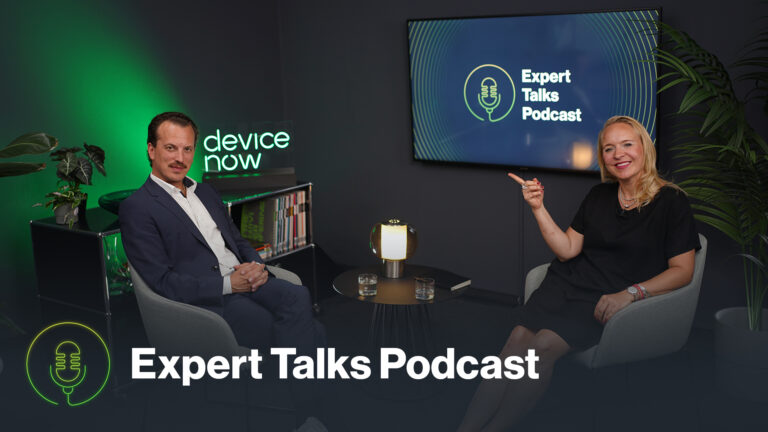
Sven Matthiesen is Managing Director at devicenow, responsible for sales, product development, customer management, and marketing. With an open, direct style and a talent for storytelling, he has a rare ability to make complex topics accessible and to inspire very different audiences. His exceptional drive and broad experience have made him one of the most valued leaders in the devicenow team.
1. DaaS has been on the radar of most IT leaders for years, but a lot of enterprises are still managing aging fleets the old way: buying, owning, sweating assets until they break. Is Sale and Rent Back genuinely a smarter path in, or just another way to delay the inevitable?
Fair challenge. Done badly, Sale and Rent Back is just a sale-leaseback with extra steps. You unlock some cash, the fleet keeps aging, and you’re back in the same corner in three years.
Done well, it’s the opposite. The real value isn’t the capital you free up; it’s that it forces the operational reset most organisations keep postponing. The moment those assets move onto a managed rental, the devices get a defined lifecycle, refresh becomes a predictable rhythm instead of a painful capex event, and someone is finally accountable for the whole thing: support, retirement, secure wipe, sustainable disposal.
So: genuinely smarter, but only if you use it to break the buy-own-sweat-break cycle, not extend it by one more round. The question I’d put back to anyone on the fence: is owning the hardware actually a strategic advantage, or just a habit you’ve never had a reason to question?
2. For a company that has never operated on a subscription model for IT, entering DaaS can feel like a big leap. How does starting with Sale and Rent Back actually make that transition more manageable?
It’s a big leap if you frame it as “switch everything to a subscription overnight.” It isn’t.
What makes DaaS feel intimidating isn’t the subscription mechanics, it’s the imagined disruption: ripping out a working fleet and rebuilding processes while the business keeps running. Sale and Rent Back removes that, because you start with the devices already on your employees’ desks. Nothing gets ripped out. People keep working on the same hardware. What changes is underneath: those assets move onto a managed rental with a defined lifecycle, predictable costs, and a partner accountable for support and refresh.
So it’s a step, not a leap. You learn how DaaS actually feels on a fleet you already know, and by the time those devices hit end-of-life, the model isn’t a theory anymore. It’s just how IT works now.
3. IT decisions always end up in a conversation with finance. What is the business case for Sale and Rent Back, and why does it tend to resonate beyond just the IT department?
This is exactly why Sale and Rent Back travels so well: it speaks finance’s language natively, instead of IT having to translate “better device management” into something the CFO cares about.
It converts a depreciating owned asset into an operating expense, freeing up capital parked in hardware that loses value every quarter, and turning a lumpy capex cycle into one predictable number per device per month. Easier forecasting, cleaner budgets, no surprise refresh blowing up the quarter.
But it resonates beyond finance because one move solves several problems at once: IT offloads operational burden, finance gets capital efficiency, procurement gets a single accountable partner, ESG gets documented secure end-of-life.
That’s the real case. The operational win and the financial win point in the same direction. Which is why it gets a “yes” in rooms where IT proposals usually get a “let’s revisit next year.”
What Sven describes is a shift in how enterprises think about the relationship between IT and ownership. The buy-own-sweat-break cycle is not a strategy; it is a habit. Sale and Rent Back is one of the most practical ways to break it. The entry point is low: no fleet replacement, no disruption, no big migration project. The devices stay, the people keep working, and the operational and financial structure underneath changes in a way that both IT and finance can get behind. For organisations that have been putting off the move to DaaS because the timing never felt right, that is exactly the point. With Sale and Rent Back, the right moment is now.
Ready to take the first step? Learn more about Sale and Rent Back at devicenow and how it can work for your organisation: