Reading time: min
The best ideas in IT prove themselves beyond theory. They come from the people doing the work on a day-to-day basis, the ones who’ve built something, fixed something, or learned a lesson the hard way. These are the people we want to sit down with.
In our recurring Q&A series “3 Questions …”, we bring you thought leaders from across our partner network, one conversation at a time. Only three questions. Only three answers. But plenty of insight. Your knowledge snack for in-between.
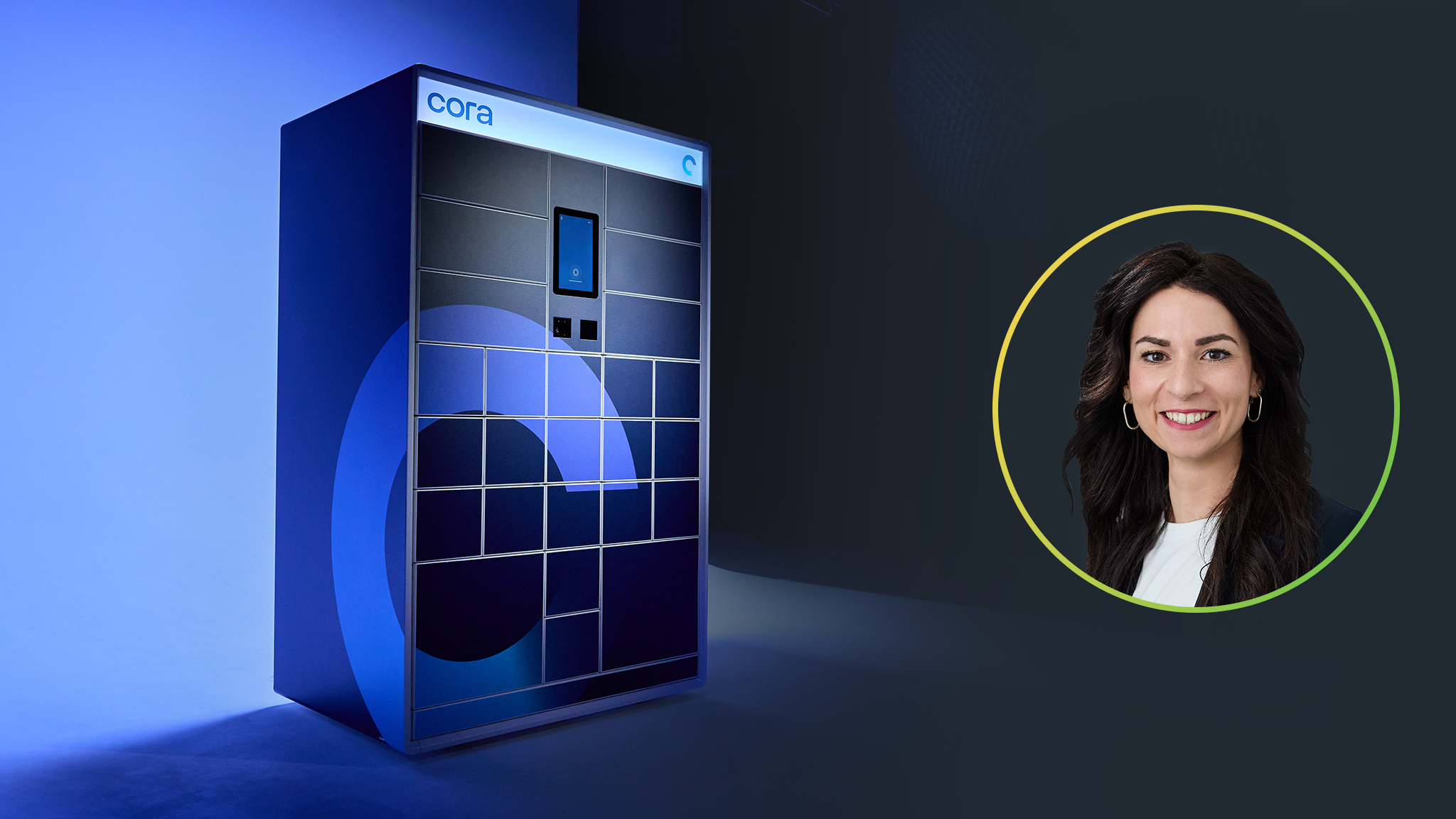
In many enterprises, getting a new laptop or a replacement charger still means opening a ticket, waiting for IT, and picking it up at the help desk during office hours. cora changes that. Their company provides intelligent self-service solutions that automate the distribution, return, and replacement of IT equipment, giving employees access to devices and accessories around the clock. Because it integrates with leading ITSM platforms and enterprise workflows, cora reduces manual effort and frees IT teams to focus on higher-value work. Today it supports hospitals, public sector organizations, manufacturers, financial institutions, and global enterprises across ten European countries. As an official devicenow partner, cora automates the final step of the device journey, turning Device as a Service into a seamless end-to-end experience for IT teams and end users alike.
Melanie Müller is Chief Executive Officer at cora. She pairs strategic vision with a strong focus on execution, turning ideas into reality and bringing the right people, roles, and challenges together at the right time.
Under her leadership, cora is rethinking how IT support works in the physical world. Its smart lockers and vending machines let employees pick up, return, and replace hardware through self-service, at any time of day. Melanie’s goal is clear: to make cora a standard part of how leading companies deliver IT to their people.
1. For most new hires, the first physical contact with IT happens on day one, at a help desk counter or a desk with a laptop waiting to be set up. That moment shapes how employees see IT long after onboarding. From what you see at cora, where does the traditional support model start to strain in organizations with 1,000 or more seats?
The real question is: which requests truly require an IT professional’s expertise, and which can be solved through self-service?
We’re seeing a clear shift. Routine tasks like collecting a mouse, headset, or replacement laptop no longer need to involve the help desk. AI agents and physical self-service solutions like cora allow employees to resolve these requests themselves, anytime, without waiting for IT availability.
That benefits everyone. Employees get what they need immediately, while IT teams can focus on the issues where their expertise creates real value.
To me, a modern first touchpoint with IT should be built entirely around employee experience. If someone needs a replacement mouse, they should be able to pick one up within minutes. If their laptop fails, the help desk provides support while cora immediately delivers a replacement device. More complex or security-related issues, however, should always remain in the hands of IT experts.
The help desk of the future won’t be measured by how many tickets it processes, but by how many problems employees never have to think about in the first place.
2. You operate in ten countries, with customers ranging from 24/7 hospitals to global manufacturers. With the IT skills shortage tightening and Generation Z bringing very different expectations into the workplace, where do you draw the line between what IT support teams must keep doing themselves and what should be automated?
IT organizations, and especially IT support teams, are under more pressure than ever. Expectations keep increasing, while resources often stay the same. That’s why I encourage every IT leader to look closely at where their teams spend their time.
We’ve seen organizations invest hours every week in routine tasks like handing out IT equipment. Those activities are important, but they don’t require highly skilled IT professionals. Instead, you could invest that time and budget in cybersecurity, digital transformation, or improving the employee experience.
The biggest misconception is that employees aren’t ready for self-service. In reality, they already use self-service every day in their private lives. They expect the same speed and convenience at work.
My advice is simple: take a step back and challenge the status quo. Ask yourself which tasks truly require an IT expert and which can be automated. Especially in organizations with multiple locations, routine processes like device distribution can be handled by solutions such as cora. The result is happier employees, more efficient IT operations, and support teams that can focus on the work that creates the most value.
3. The way devices get distributed inside companies hasn’t really changed in 20 years. A person hands another person a laptop in a meeting room. cora is one of the few players rethinking that physical, which assumptions IT leaders still treat as fixed today will look strange in hindsight?
I believe that, five years from now, we won’t be talking about devices anymore. We’ll be talking about services.
Today, most organizations still manage devices as a series of manual transactions. Someone requests a laptop, someone approves it, someone prepares it, someone hands it over, and someone documents it. But in reality, it’s one continuous digital process.
In the future, the entire device lifecycle will be largely automated. A new employee joins the company, and their welcome package is triggered automatically. Employees request equipment through self-service; devices are prepared, documented, and made available for collection or delivered to the right location. Returns, repairs, loan devices, and offboarding all become part of the same seamless workflow.
I also believe that physical self-service will become a standard component of every modern IT support organization. Just as no enterprise questions the need for an ITSM platform today, solutions like cora will become a natural part of the IT service ecosystem, seamlessly integrated into the overall support process.
The biggest shift won’t be technological. It will be a mindset shift. Today, many IT leaders still assume that someone must physically hand over a device. In five years, we’ll wonder why we ever believed that was necessary.
Just as banking no longer depends on a physical branch, IT equipment will no longer depend on a person on the other side of the counter.
What stands out in Melanie’s answers is how little of the challenge is technical. The automation exists, the integrations exist, and the case for freeing IT teams from routine hardware logistics is hard to argue with. What holds most organizations back is a quiet assumption that handing over a device is a task that belongs to IT staff. That made sense when laptops were rare, and every device needed an expert to set it up. In a modern enterprise with thousands of seats, it drains IT time with every new hire, every return, and every broken screen.
Combined with Device as a Service, physical self-service like cora’s lets IT leaders treat hardware the way they already treat software: something that arrives, works, and gets replaced when needed. The real change begins when IT leaders see device logistics not as part of their team’s job, but as a process that can run on its own. In the end, this mindset shift is what will separate forward-looking IT organizations from the rest.