Reading time: min
With our devicenow DaaS solution, we operate in a fast-moving, modern environment. Speed, performance, and efficiency are our standard. But let’s be honest – sometimes there’s just no time to step back and explore the ideas shaping our industry and discover the great minds behind them.
That’s why we’re launching “3 Questions to…” – a compact Q&A series with thought leaders from our partner network. Only three questions. Only three answers. But plenty of insight. Your knowledge snack for in-between.
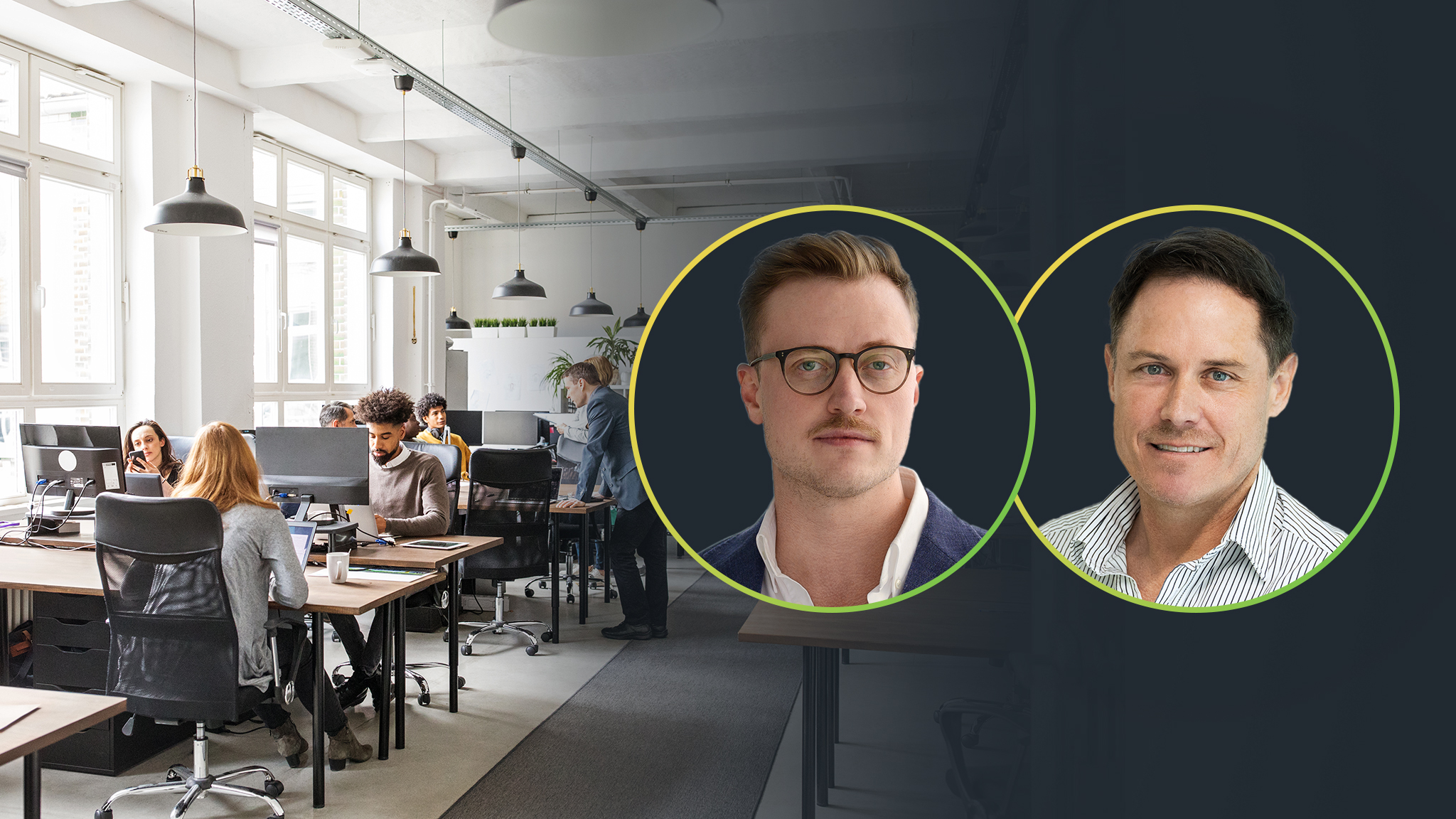
In this edition, we turn the spotlight inward. At devicenow, forward-thinking and client success aren’t ambitions – they’re built into how we operate. That’s why we spoke to two key voices from our sales team: Julius Schafmeister, VP Sales Central Europe & Nordics, and Shayne Harris, VP International Sales. Together, they bring decades of experience and a global perspective on workplace transformation, helping CIOs and IT leaders deliver lasting value with Device as a Service.
Julius Schafmeister
As VP Sales Central Europe & Nordics, Julius is responsible for driving customer success and expanding DaaS adoption across key European markets. With a strategic mindset and strong CRM background, he focuses on turning complex IT challenges into streamlined, scalable solutions. His clear, analytical approach helps organizations realize the full value of lifecycle-based IT.
Shayne Harris
Shayne is VP International Sales at devicenow, leading global growth across Europe, the U.S., and APAC. With over a decade of experience in the as-a-service space, he brings deep expertise in building sales strategies and high-performing teams. Shayne is focused on helping organizations modernize their digital workplace and align IT investments with long-term business goals.
1. What are the biggest pain points companies face when enabling flexible work models today, and how can DaaS help solve them?
Julius:
The three main points that customers face today are the need for device and process standardization, remote manageability, and IT relief. DaaS addresses this by introducing a standardized shopping basket accessible internationally and delivering pre-staged devices that reduce on-site effort for IT departments. With all the hardware handling taken over by an external party, companies free up valuable IT resources to focus elsewhere.
Shayne:
When we’re enabling a remote or a flexible workforce, the key challenges are employee productivity and experience. If something goes wrong, that impacts their ability to do their job – but with next-business-day swap, we can solve issues quickly and facilitate better productivity. As a result, high employee experience leads into things like high talent retention and helps organizations attract top professionals.
2. How can DaaS support IT departments and at the same time enhance the digital experience for employees working remotely or in hybrid setups?
Shayne:
Taking away some of those low-value, highly manual tasks from internal IT enables us to free them up to better support employees and focus on more strategic priorities. Especially in hybrid work environments, IT teams are stretched between remote and in-office support. DaaS helps reduce that pressure and enables IT to deliver more value to the business.
Julius:
For employees, it’s often about reliability and immediacy. With DaaS, high-performance devices are available almost immediately, wherever they’re needed. This level of responsiveness is one of the main drivers for creating a superior employee experience.
3. Why is DaaS becoming a key driver for business agility and long-term growth in today’s rapidly changing work environment?
Julius:
We need to redefine agility – it’s not just about reacting quickly anymore. It’s about having systems and processes in place that allow up- and downscaling of IT hardware, as well as fast onboarding of talent – globally. DaaS makes it easier to enter new markets without having to worry about logistical burdens or assets getting stuck in customs. That kind of operational flexibility is what defines true agility today.
Shayne:
We can help customers right-size their fleet so they’re only deploying technology employees actually use, which aligns IT spending more closely with real usage and frees up capital for strategic investments. In fast-moving environments, capital agility is key. Frequent tech refresh cycles let organizations tap into innovations like AI PCs – something older devices simply can’t support.
The perspectives shared by Julius and Shayne echo many of the key findings from the latest IDC Info Snapshot, sponsored by devicenow. While this interview offers hands-on insights from our sales leaders on the frontline of digital workplace transformation, the IDC research adds a data-driven view of the challenges and opportunities CIOs face today.